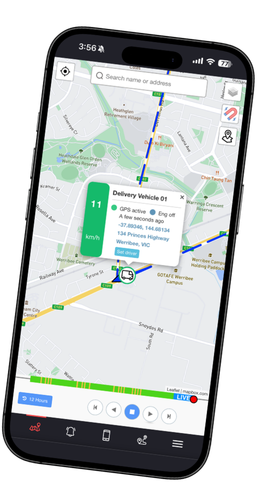
Set clear rules once and let Track My Ride tell you what matters. Our alerts convert live activity into simple notifications you can act on quickly.
How alerts work across the board
- Choose the vehicles or assets each alert applies to, from one ute to your entire fleet and decide who is notified by app, email or SMS.
- Pick how often notifications arrive: every minute, 5 minutes, 15 minutes, 30 minutes, hour or 2 hours.
- Filter by area, from anywhere in Australia to a suburb or a custom geozone you draw on the map.
- Set quiet times so only critical events break through when you prefer not to be disturbed.
Movement Alerts
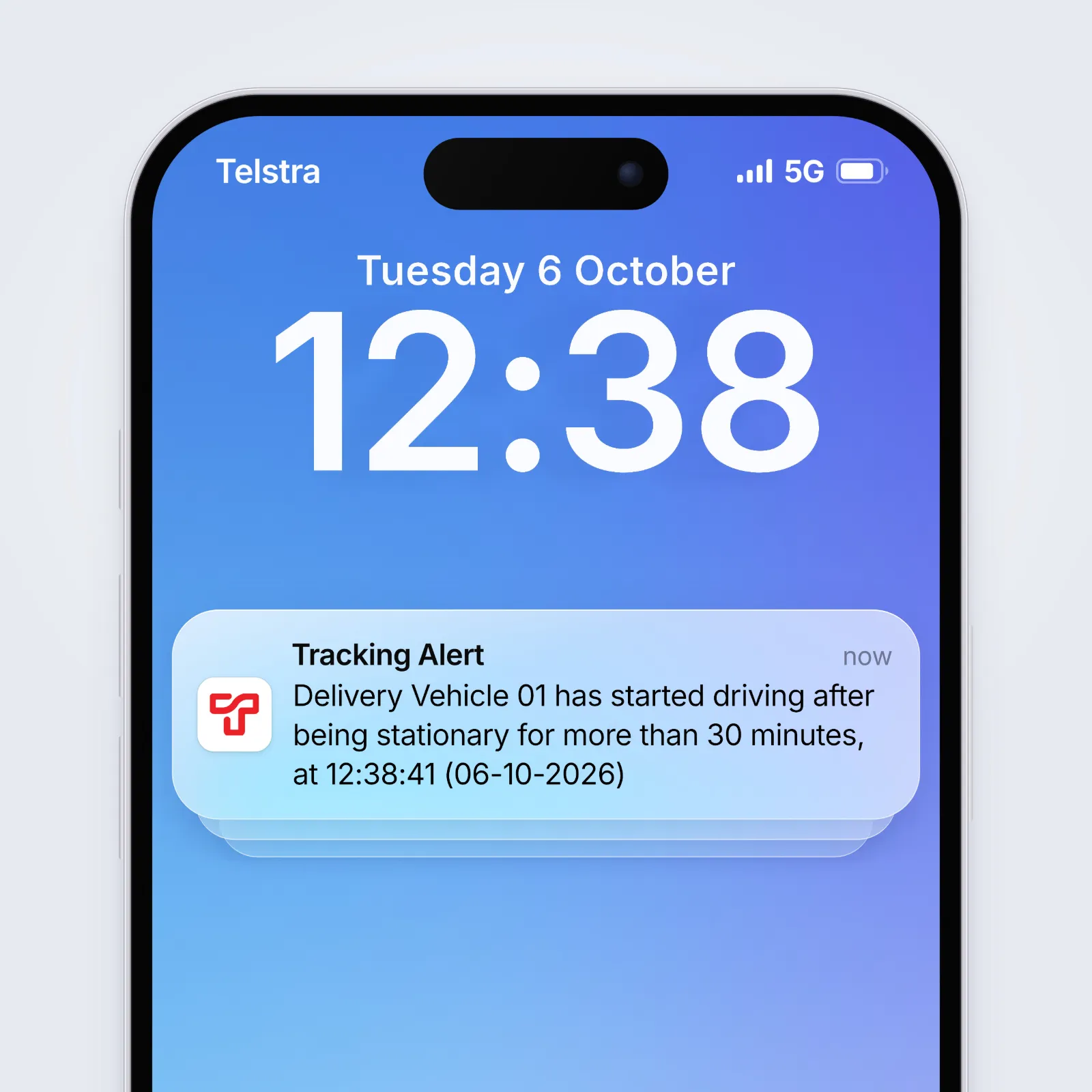
Be notified when a vehicle starts moving. Perfect for visibility after hours or for duty of care on long runs.
Why it helps: out of hours movement can mean unauthorised use. Continuous movement alerts also highlight potential fatigue and scheduling issues.
How our customers use this alert: a regional contractor watches for movement after 6pm. If a ute leaves the depot at night, the owner checks whether it is an approved call out. They also use the “more than 6 hours continuously” option to prompt drivers to take a break on long highways.
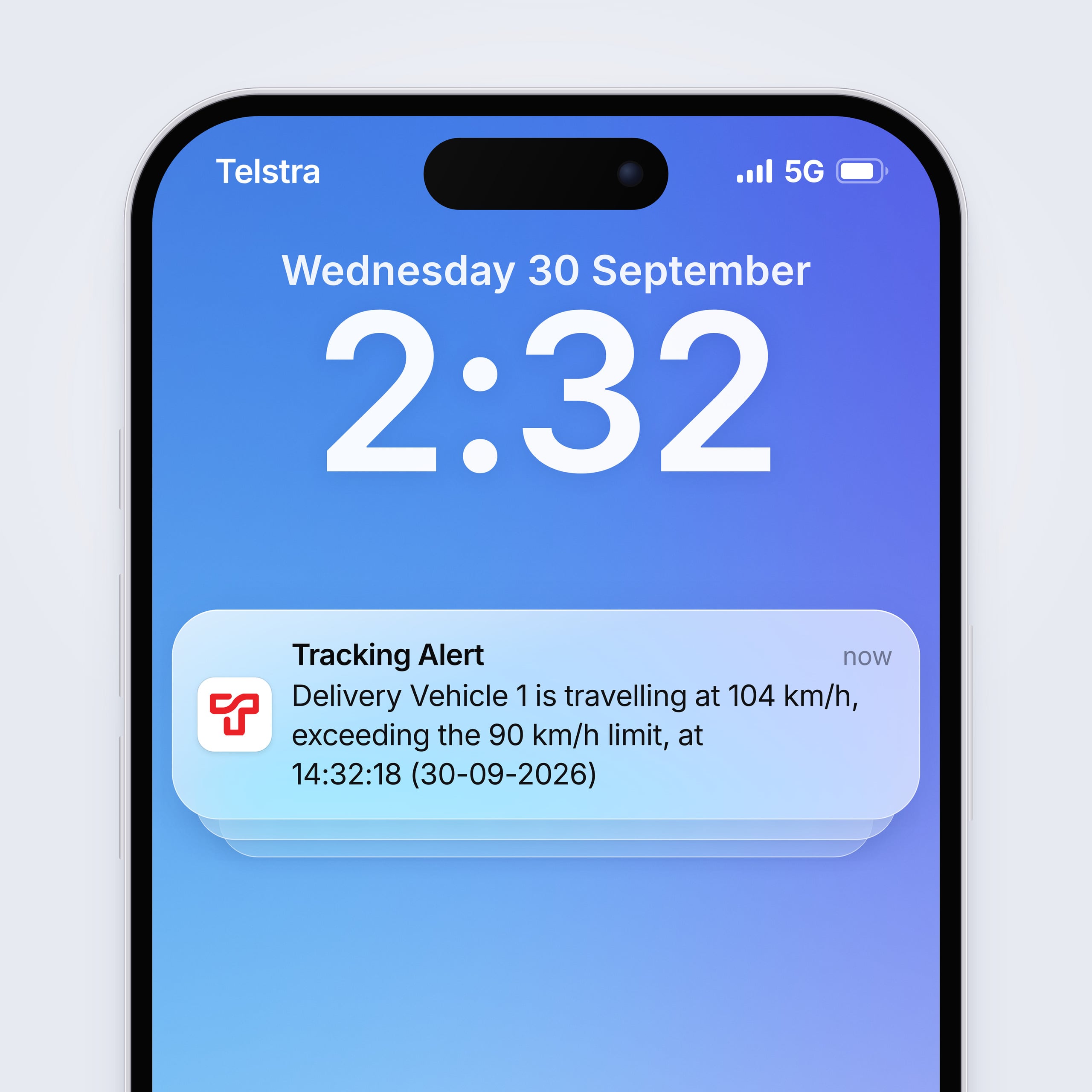
If your drivers should not exceed a certain speed, set that speed and receive an alert the moment it is crossed.
Why it helps: reduce crash risk, fuel burn and fines while protecting your brand on the road.
How our customers use this alert: a metro delivery fleet sets 80 km per hour for urban runs and 110 km per hour for highways. Duty managers call the driver through the app for a quick on-the-spot coaching chat.
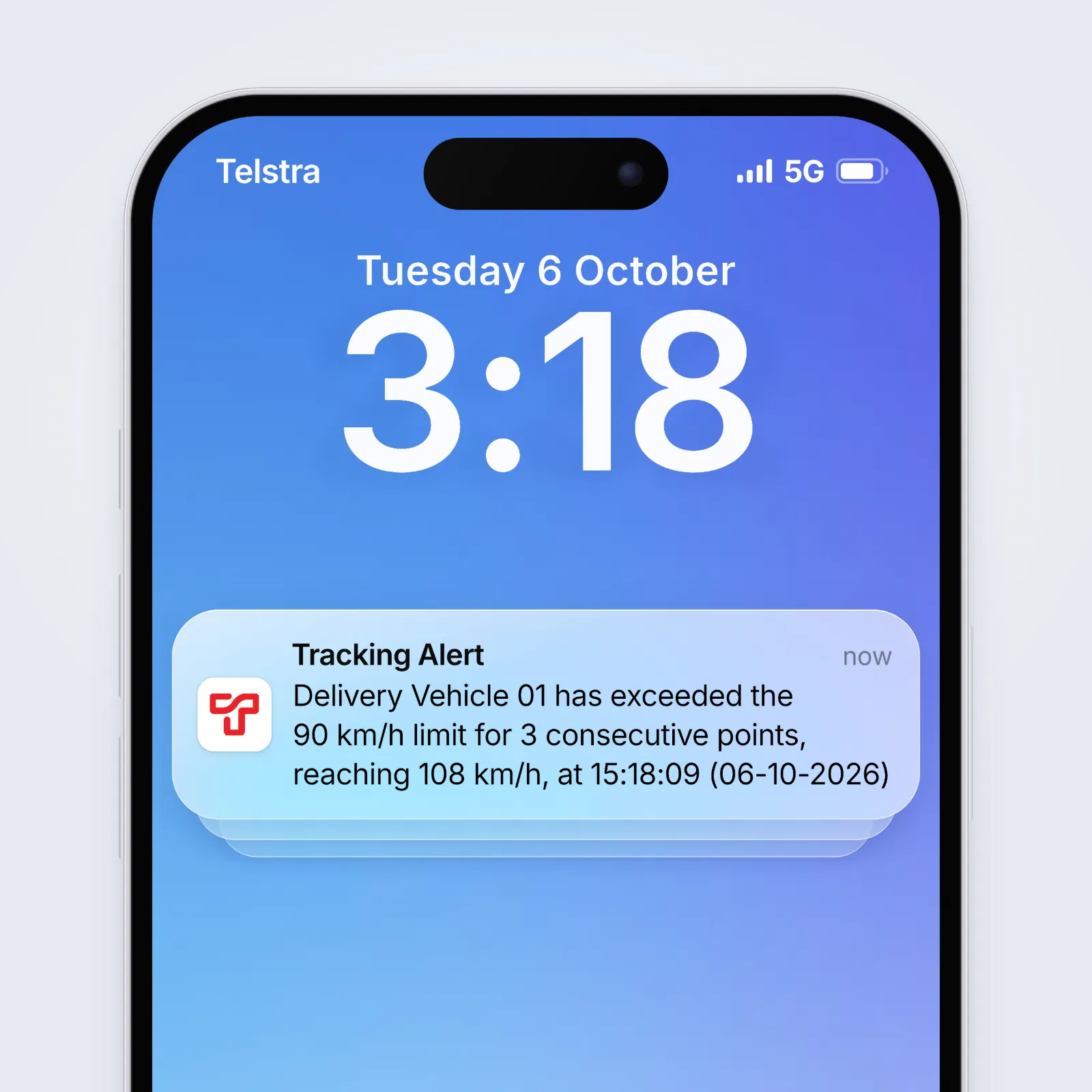
Detect sustained speeding rather than a momentary spike. The system looks for three location points in a row above the limit, regardless of the seconds between points.
Why it helps: adds a second layer of speed control so you can focus follow ups on clear, ongoing behaviour rather than brief overtakes.
How our customers use this alert: a transport operator monitors long straight sections where drivers are tempted to creep. When the alert fires, they review the playback and schedule a short coaching session.
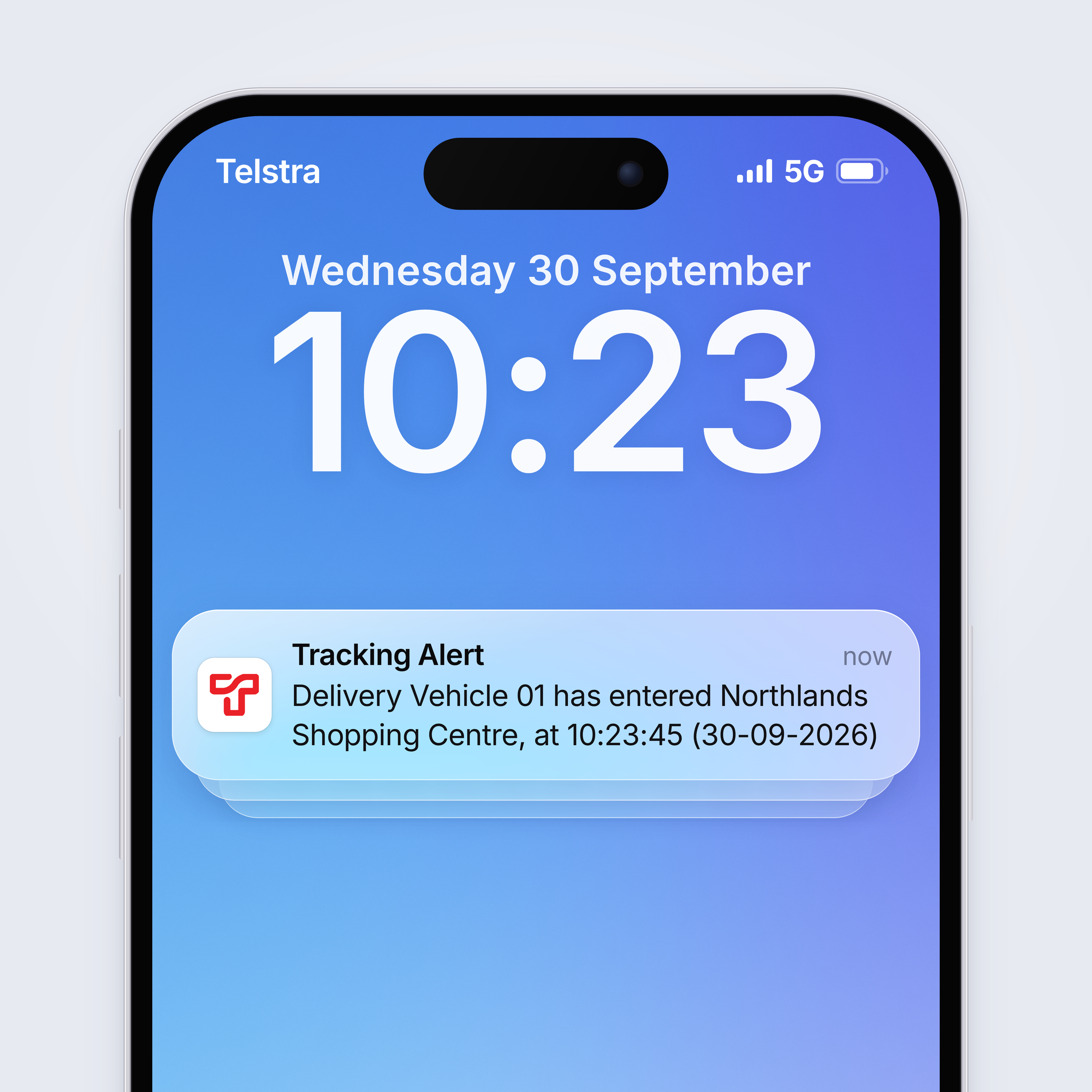
Draw and name a geozone on the live map, then choose it in the alert settings. Receive a notification the moment a vehicle arrives.
Why it helps: get immediate visibility of arrivals at customer sites, depots or restricted areas without calling the driver.
How our customers use this alert: a hire firm is notified as soon as a truck enters a quarry so the team can prepare the next job and start the billable clock.
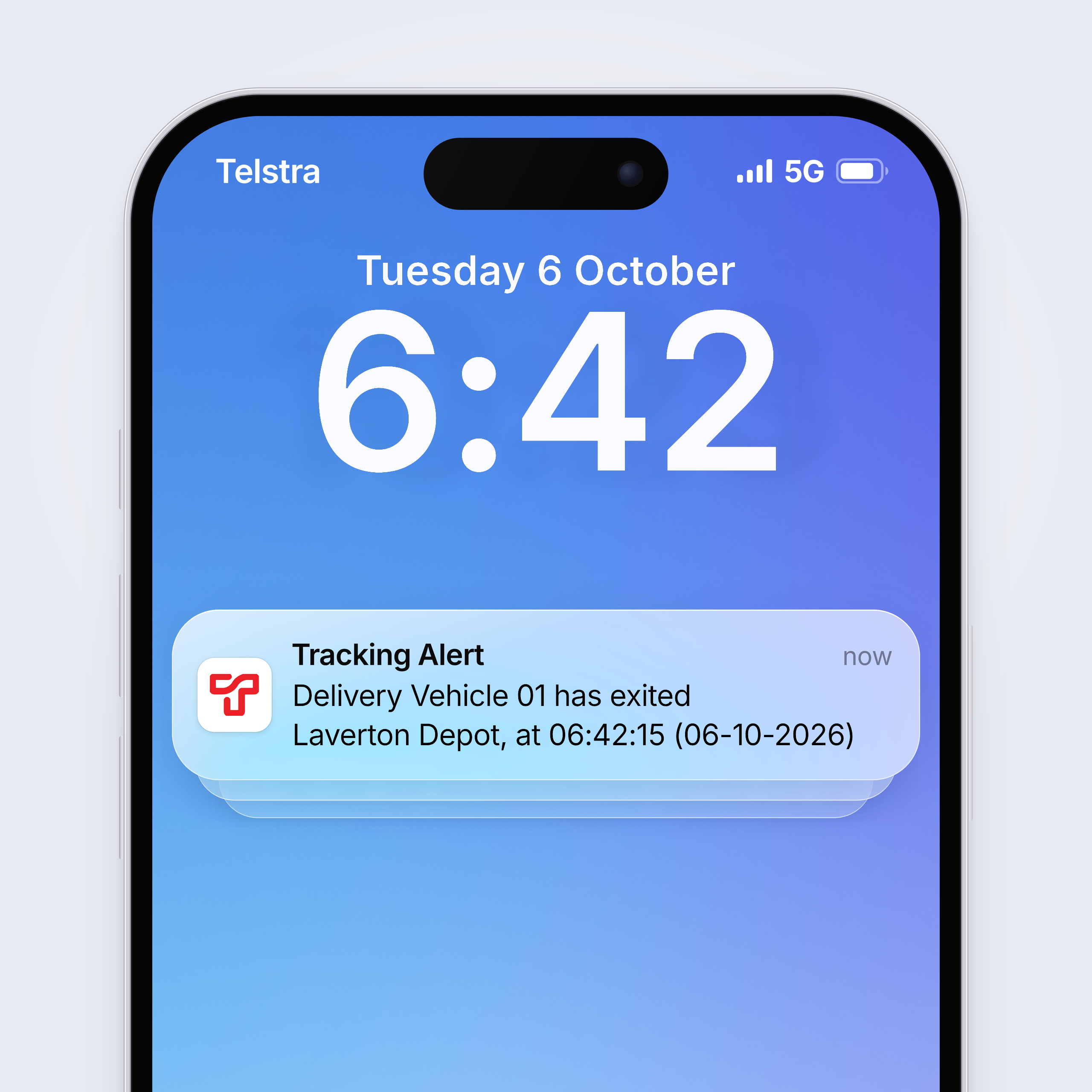
Be notified when a vehicle leaves a defined area.
Why it helps: capture accurate departure times for billing and compliance and reduce idle time on site.
How our customers use this alert: a maintenance company exports time in zone records for invoices and provides clear proof of service during audits.
Maintenance and Service Alerts
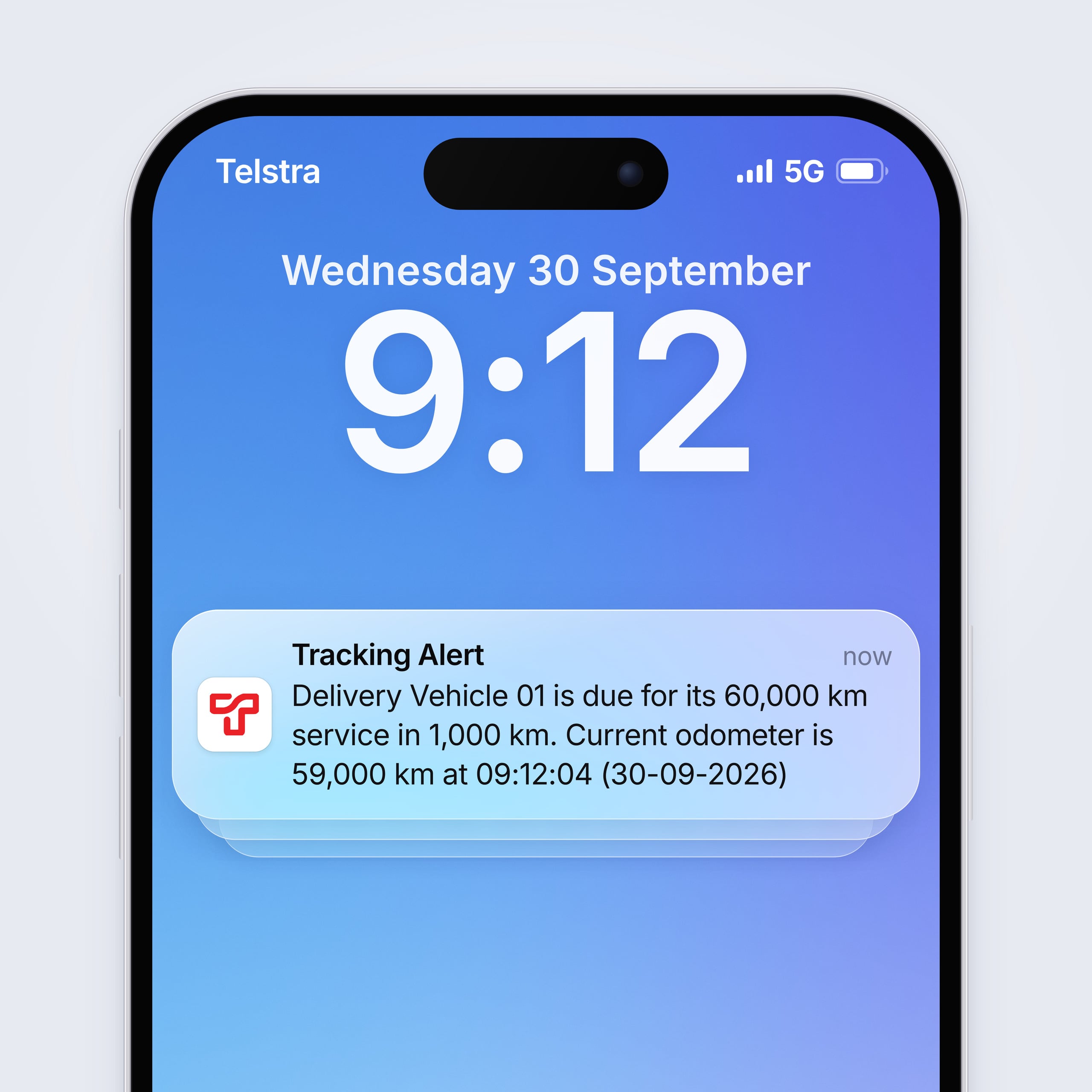
Enter the distance for the next service and we will remind you 1000 km before it is due. Add notes and select presets to include in the alert:
- Periodicals: registration renewal, general vehicle service, extend service contract, manufacturer scheduled service, inspection and safety check, tyre rotation
- Consumables: engine oil, air filter, cabin filter, brake pads front, brake pads rear, brake fluid, transmission fluid, tyres
Why it helps: plan workshops ahead, protect warranties and avoid costly breakdowns.
How our customers use this alert: a landscaping business sets 10,000 km intervals with the 1000 km pre-alert. When notified, the scheduler books the service on a day the crew is nearby and adds a note to rotate tyres and replace the cabin filter.
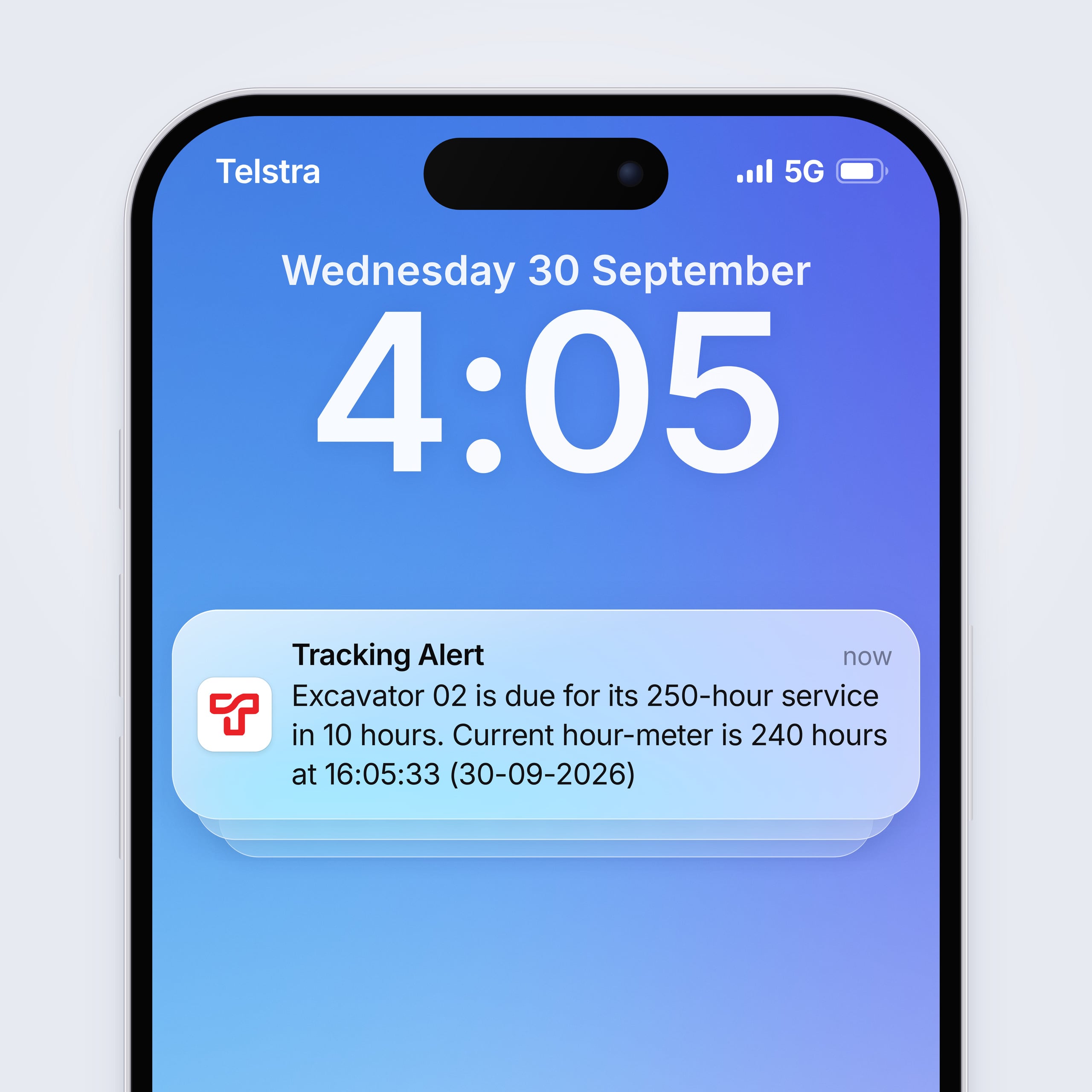
Enter a running hours threshold and receive a reminder 10 hours before it is due. Presets and notes work the same as above:
- Periodicals: registration renewal, general vehicle service, extend service contract, manufacturer scheduled service, inspection and safety check, tyre rotation
- Consumables: engine oil, air filter, cabin filter, brake pads front, brake pads rear, brake fluid, transmission fluid, tyres
Why it helps: ideal for plant and equipment where wear is driven by hours rather than kilometres.
How our customers use this alert: a civil contractor services compactors every 250 hours. The 10-hour early reminder lets them line up service with a site changeover so there is no lost time.
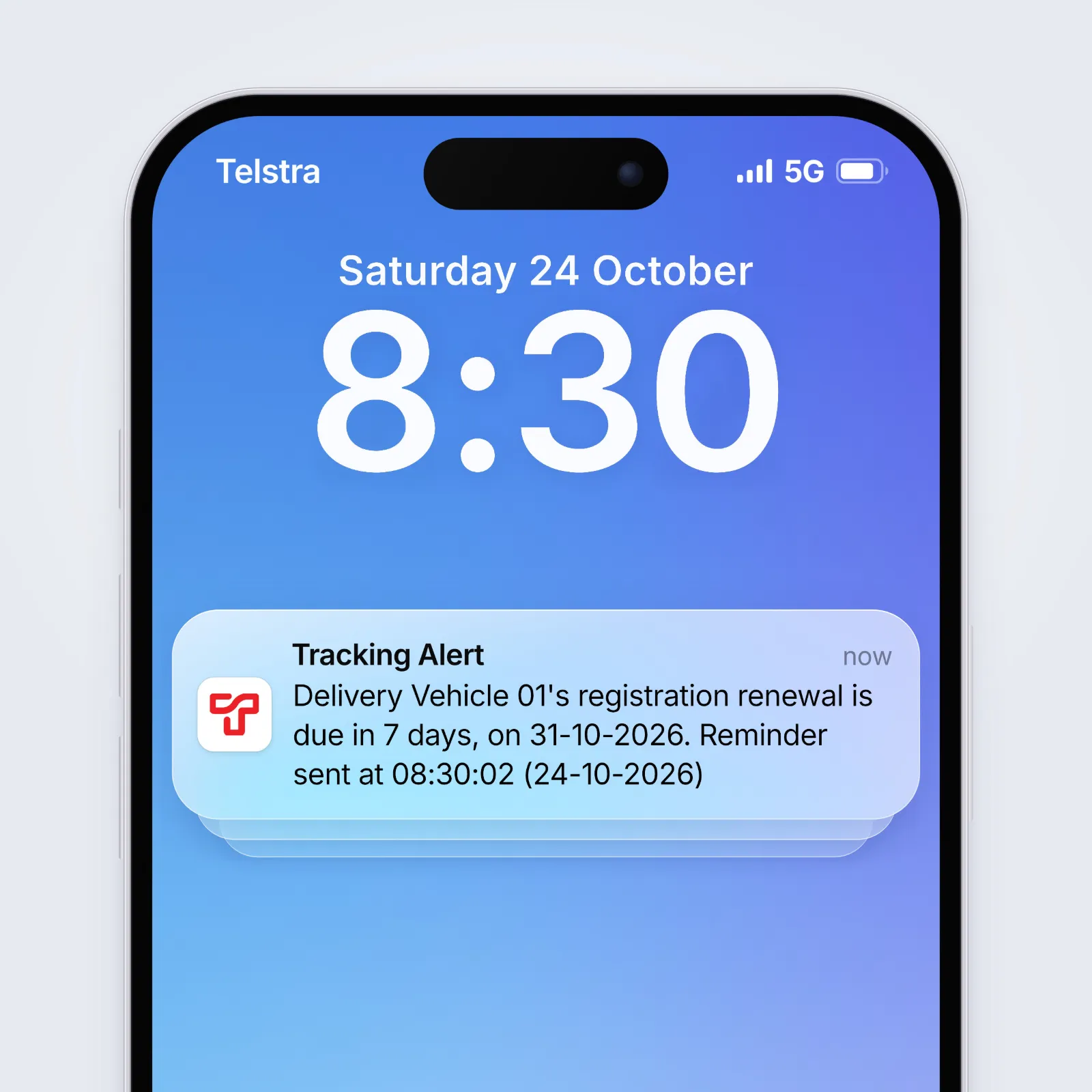
Pick a calendar date and we will notify you 7 days before it arrives. Add notes and select the same presets listed above to include in the reminder.
Why it helps: never miss registrations, inspections, permits or lease milestones again.
How our customers use this alert: a multi-state fleet loads all rego renewals as date alerts. The admin team receives a week’s notice to pay and file new certificates well before expiry.
Sensors from the Hardware Tracker Alerts
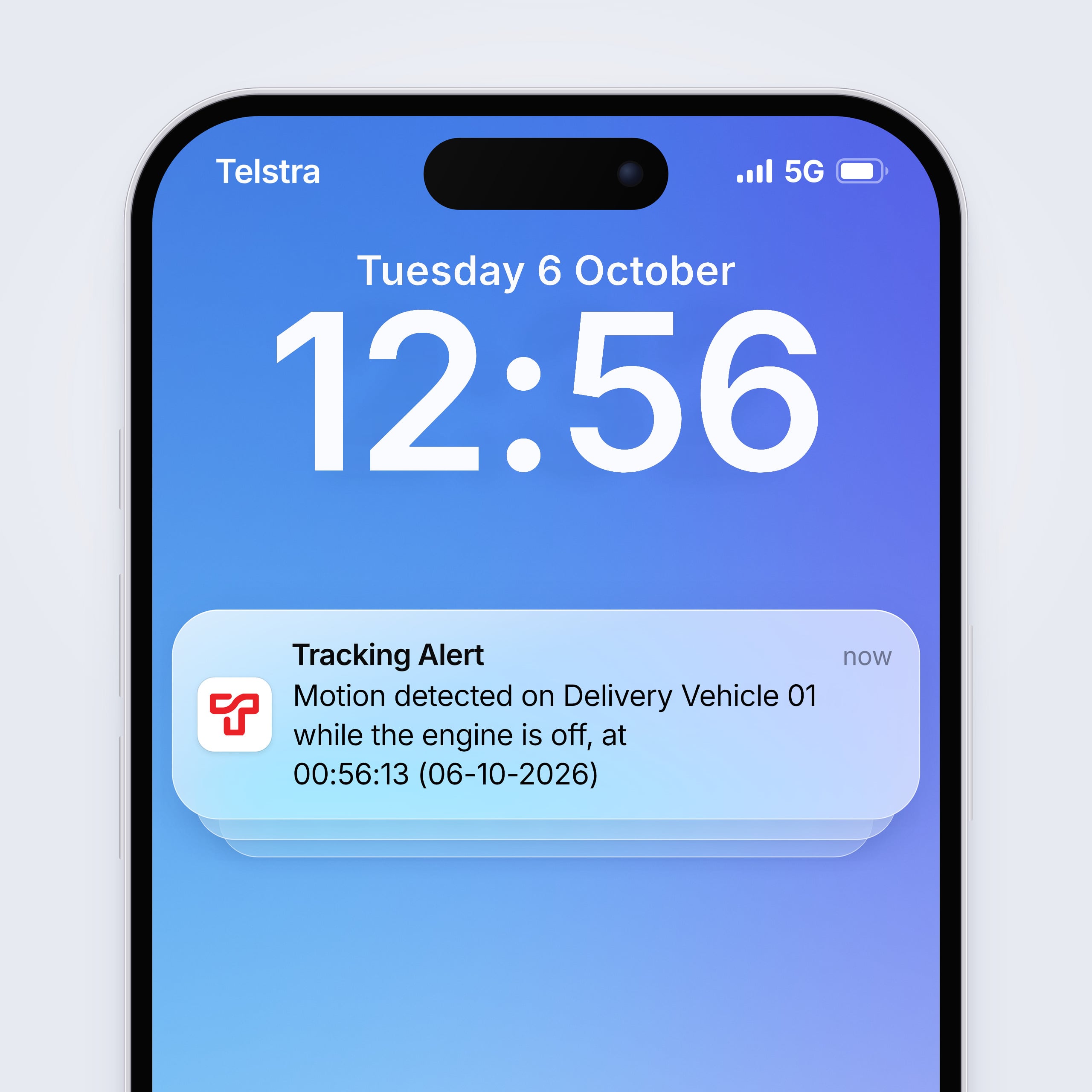
Some of our trackers, like the GeoBeetle, contain a motion sensor that confirms a couple of seconds of movement before triggering. If the engine is off and motion is detected, you are alerted.
Why it helps: catch tampering, towing or attempted theft while the vehicle should be parked.
How our customers use this alert: a tradesman parks a ute overnight at a motel. A motion alert at 2.13am prompts a quick check of the live map and a call to reception. The activity stops before any loss occurs.
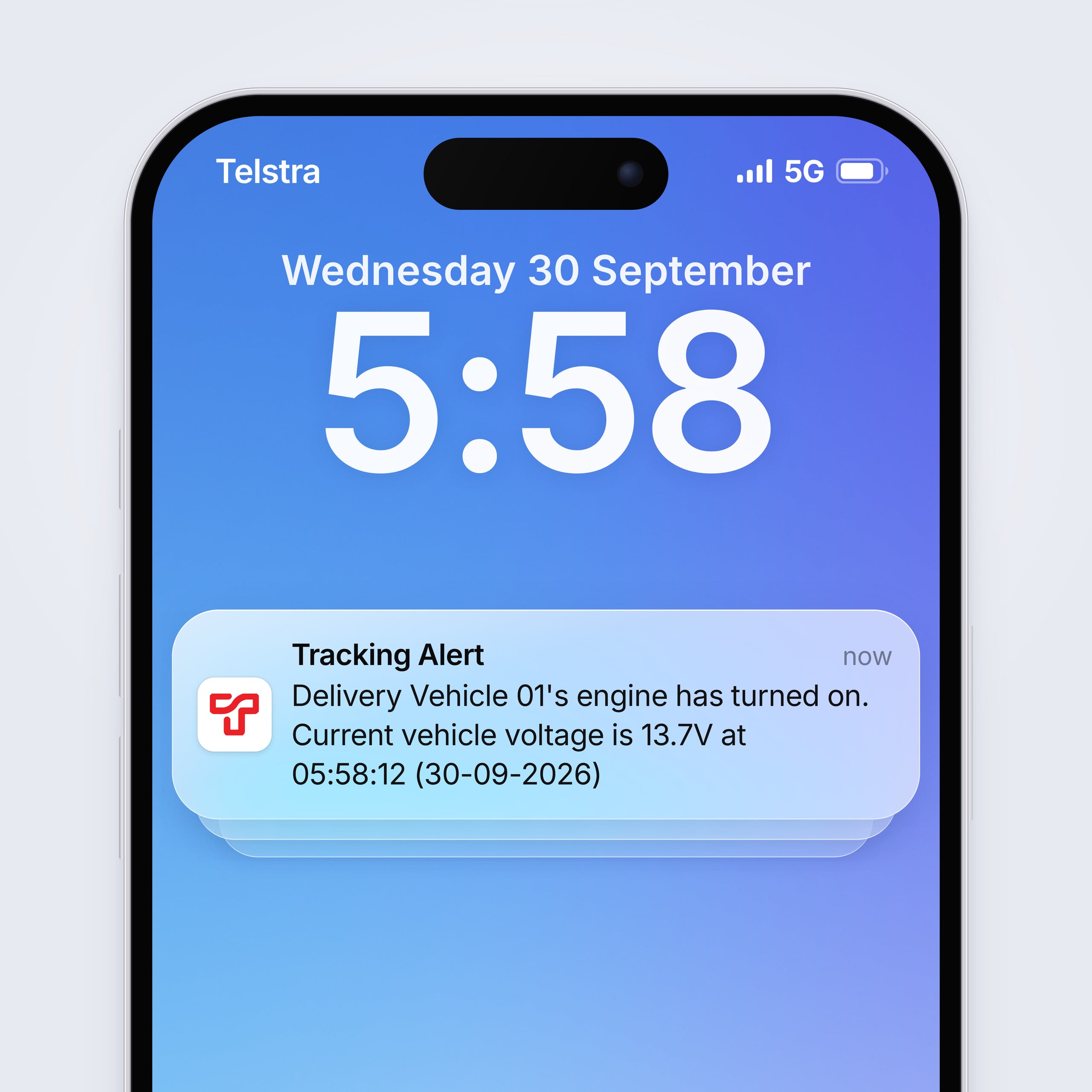
Receive a notification the moment the ignition starts.
Why it helps: confirm the start of each workday, verify pre-start timing and spot unauthorized use after hours.
How our customers use this alert: a depot supervisor watches for first starts. If a truck has not started by the planned time, jobs are reassigned before delays reach customers.
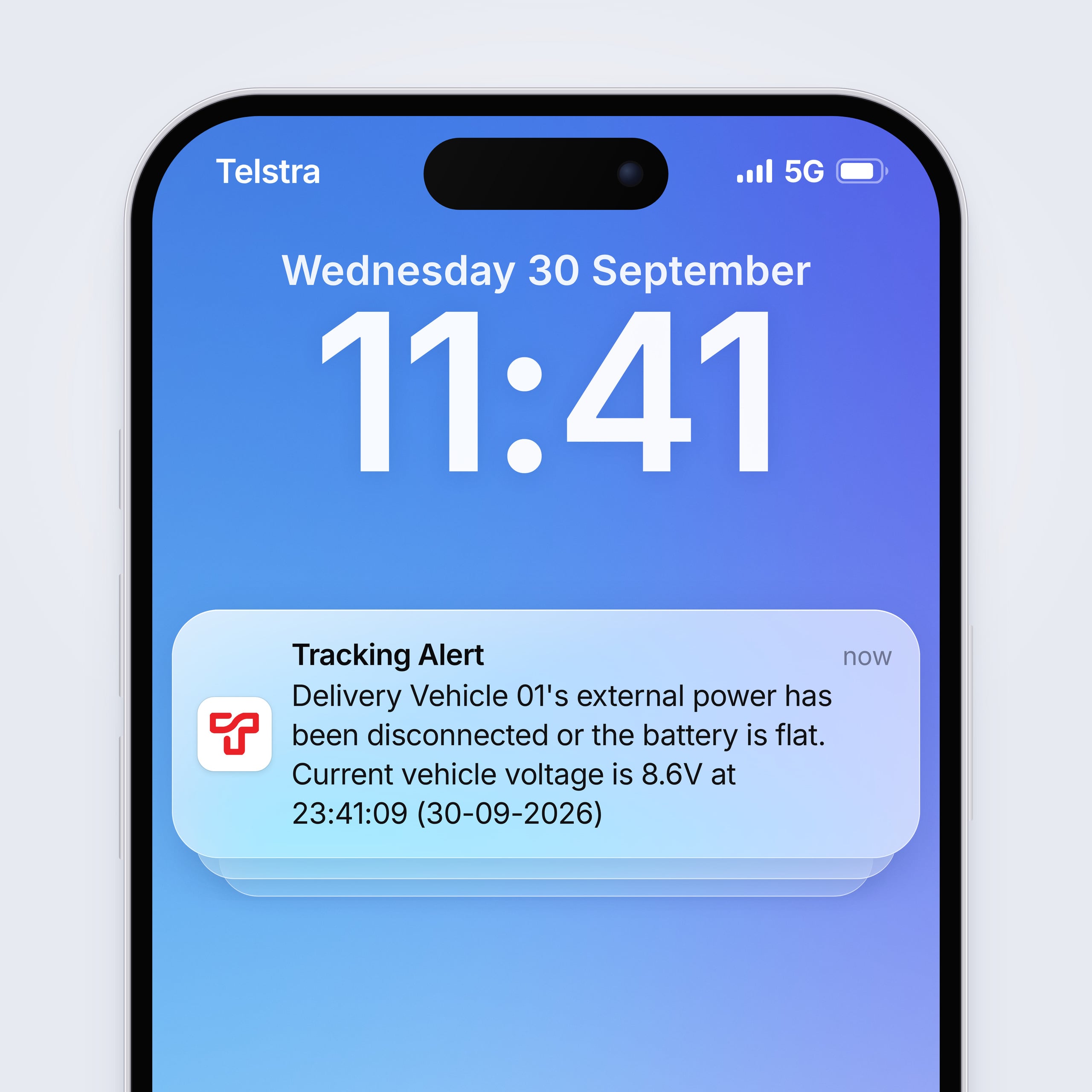
Be notified when external power or the main battery is disconnected, or when voltage drops below a set level. Options include 12.2 V, 12.0 V and 11.8 V for passenger vehicles, 26 V, 25 V and 24 V for heavy machinery and trucks, or a custom threshold between 6 and 36 V.
Why it helps: prevent morning no-starts and spot possible tampering before it causes downtime.
How our customers use this alert: a service van that rests over the weekend triggers a low-voltage alert on Sunday evening. The office schedules a battery charge at seven on Monday so the run leaves on time.
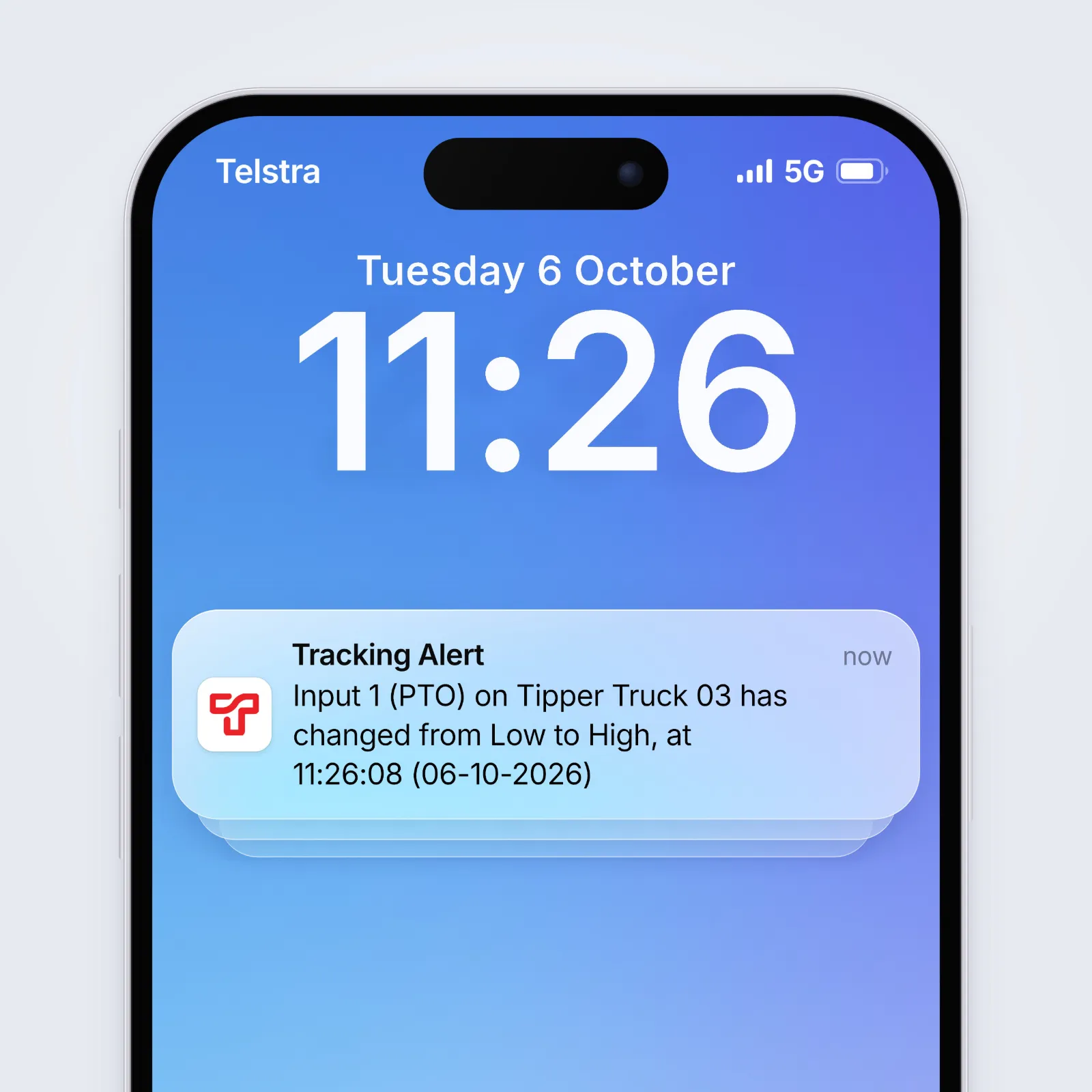
Use the tracker’s inputs to monitor connected equipment. Alerts trigger when an input changes from low to high, either above 0 V or above 9 V depending on the signal you choose.
Why it helps: prove service delivery, improve safety and understand how assets are used.
How our customers use this alert:
- A waste operator wires an input to the bin lifter so each lift is recorded and reconciled against the run sheet.
- A concrete supplier records mixer drum engagement to confirm time on pour for billing.
- A council fleet monitors light bar activation to verify safety compliance at roadside works.
Green Driving Alerts
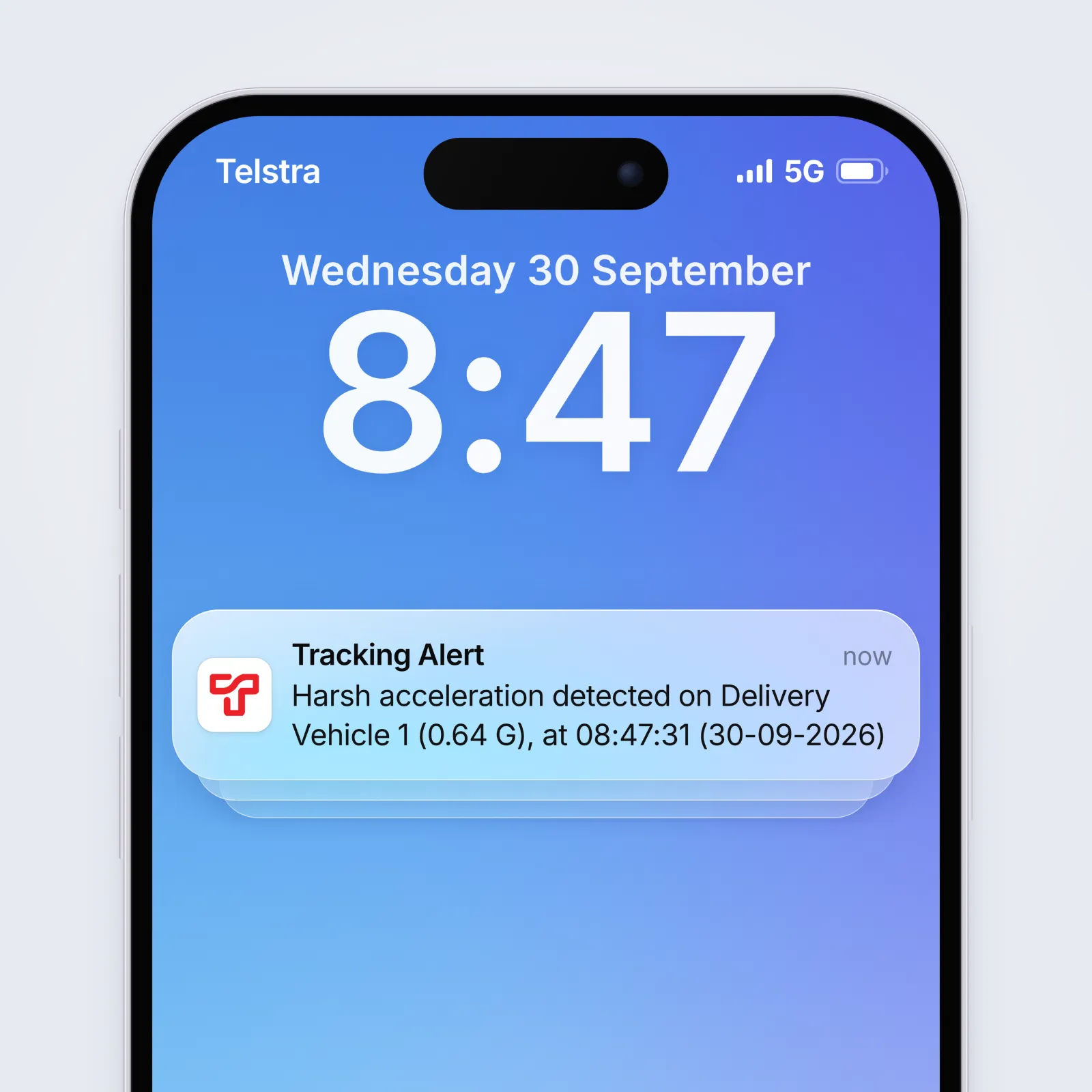
Aggressive launches can waste fuel, stress drivetrains and disturb cargo. Set sensitivity by vehicle class or enter your own G-force between 0.25 and 3.0.
- Passenger vehicle: high 0.45 G, medium 0.50 G, low 0.60 G
- Truck or van: high 0.35 G, medium 0.40 G, low 0.45 G
- Heavy vehicle: high 0.30 G, medium 0.35 G, low 0.40 G
Why it helps: aggressive launches can waste fuel, stress drivetrains and disturb cargo.
How our customers use this alert: a refrigerated delivery firm reduces harsh events and sees fewer damaged boxes and lower fuel spend within a fortnight.
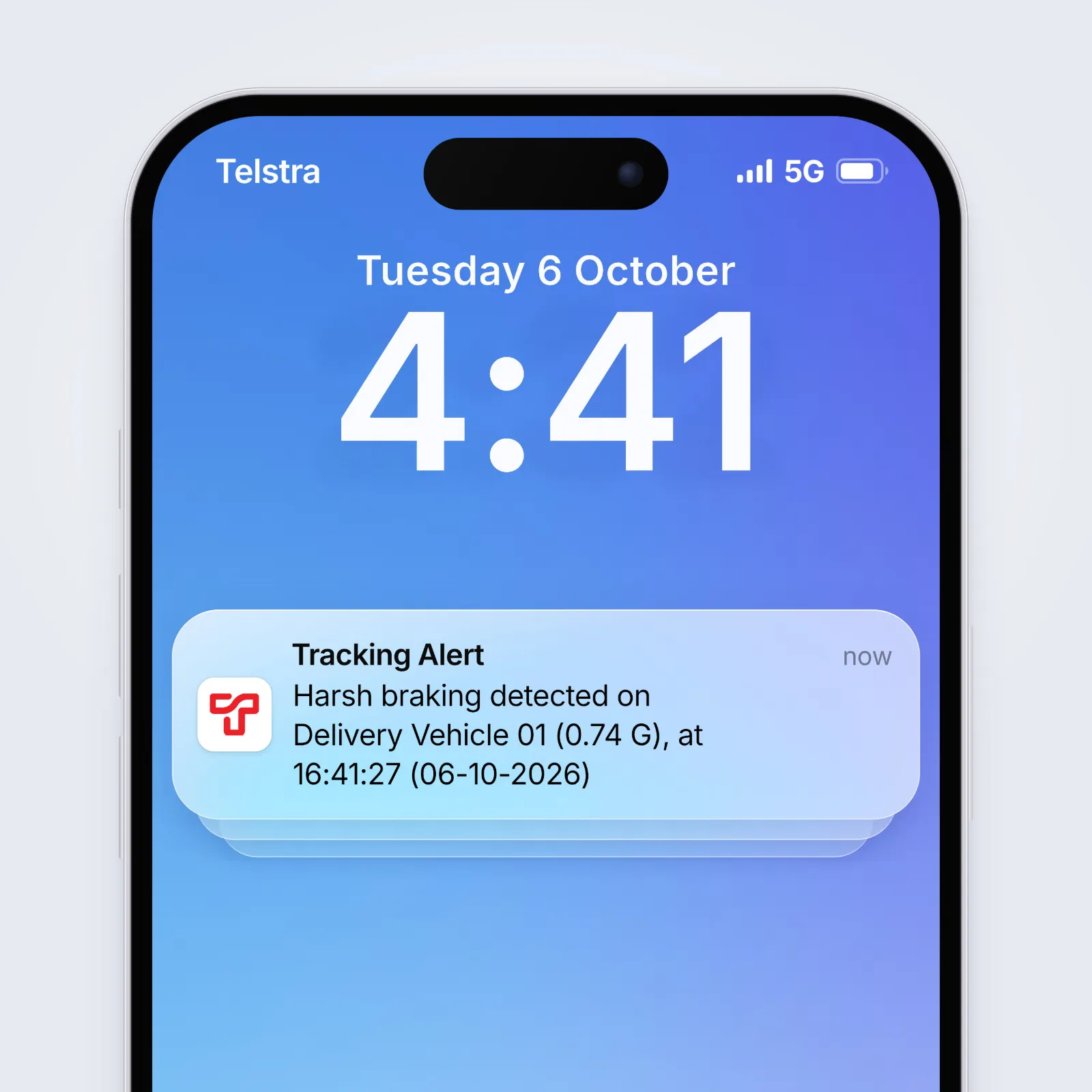
Frequent hard stops often signal tailgating or distraction and increase wear. Reducing them cuts risk and maintenance costs. Choose a sensitivity that suits your vehicles, or enter a custom G-force.
- Passenger vehicle: high 0.60 G, medium 0.65 G, low 0.70 G
- Truck or van: high 0.50 G, medium 0.55 G, low 0.60 G
- Heavy vehicle: high 0.45 G, medium 0.50 G, low 0.55 G
Why it helps: frequent hard stops often signal tailgating or distraction and increase wear. Reducing them cuts risk and maintenance costs.
How our customers use this alert: a rental fleet monitors new drivers in month one. Where alerts spike, the manager pairs the driver with a mentor for two days and incidents trend down.
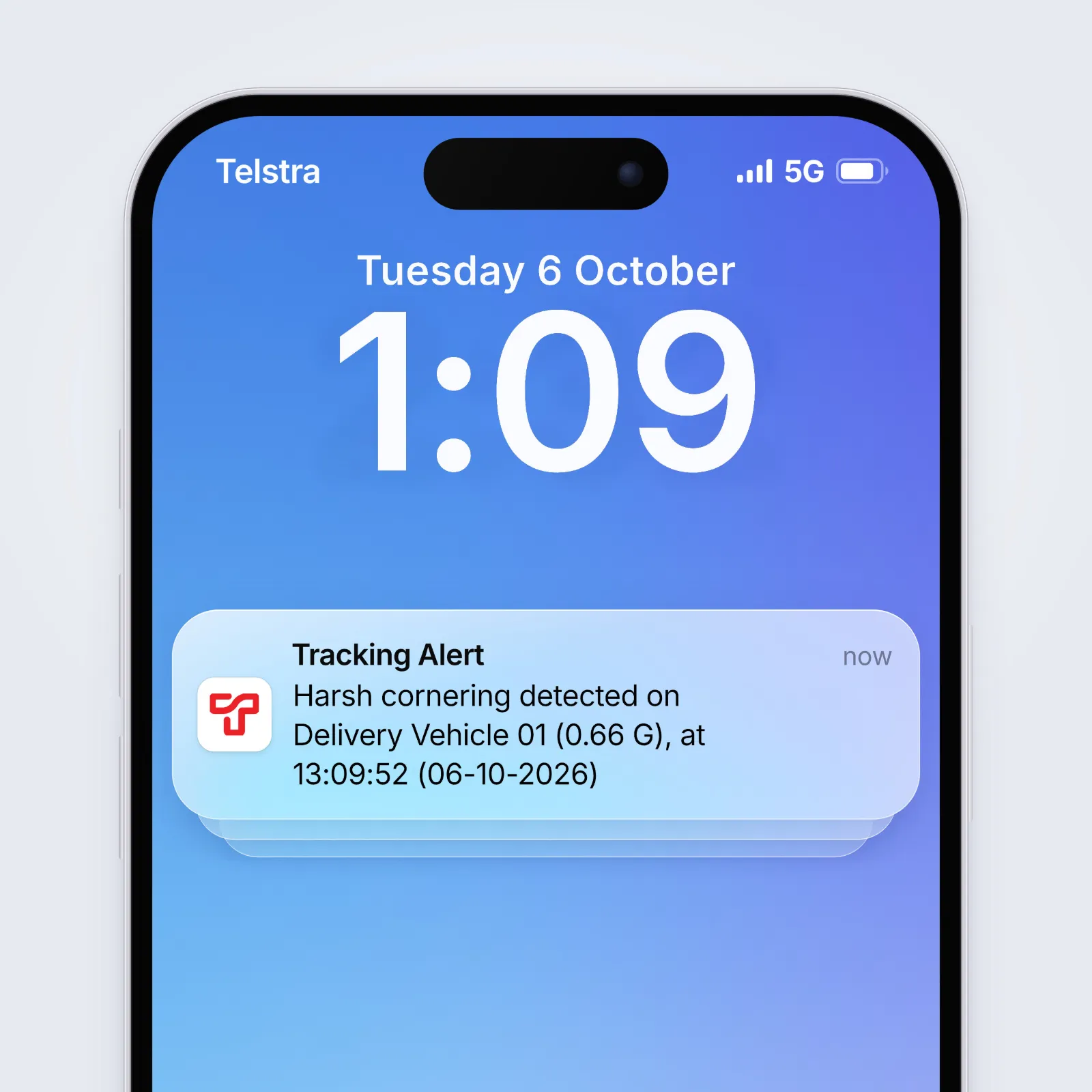
Sharp cornering risks rollovers in tall vehicles, spills in tankers and damage to stacked freight. Select sensitivity for your vehicle type or enter a custom G-force.
- Passenger vehicle: high 0.50 G, medium 0.55 G, low 0.60 G
- Truck or van: high 0.40 G, medium 0.45 G, low 0.50 G
- Heavy vehicle: high 0.35 G, medium 0.40 G, low 0.45 G
Why it helps: sharp cornering risks rollovers in tall vehicles, spills in tankers and damage to stacked freight.
How our customers use this alert: a chemical distributor sets moderate sensitivity for tankers. When an alert fires on a rural bend, the safety officer adds that location to route briefings.
Get a tailored quote that shows the best setup for your business. Serving Australian fleets for over fifteen years with weekday support.